How to Talk to an Aging Parent About Driving
Start with specific moments you've noticed, not a general verdict on their driving.
Free to compare
Lead with observations, not conclusions
The conversation goes better when you describe specific things you've seen rather than announce a decision you've already made. A dented mailbox, a missed exit, a new scrape on the bumper. These are facts your parent can talk about. "You shouldn't drive anymore" is a verdict, and most people argue with a verdict.
This works better than a single big talk because driving ability usually changes slowly. One conversation rarely settles anything. What tends to work is raising it early, before there's been a crash or a close call, so it doesn't feel like a crisis meeting.
Their insurance history is a record you can both look at
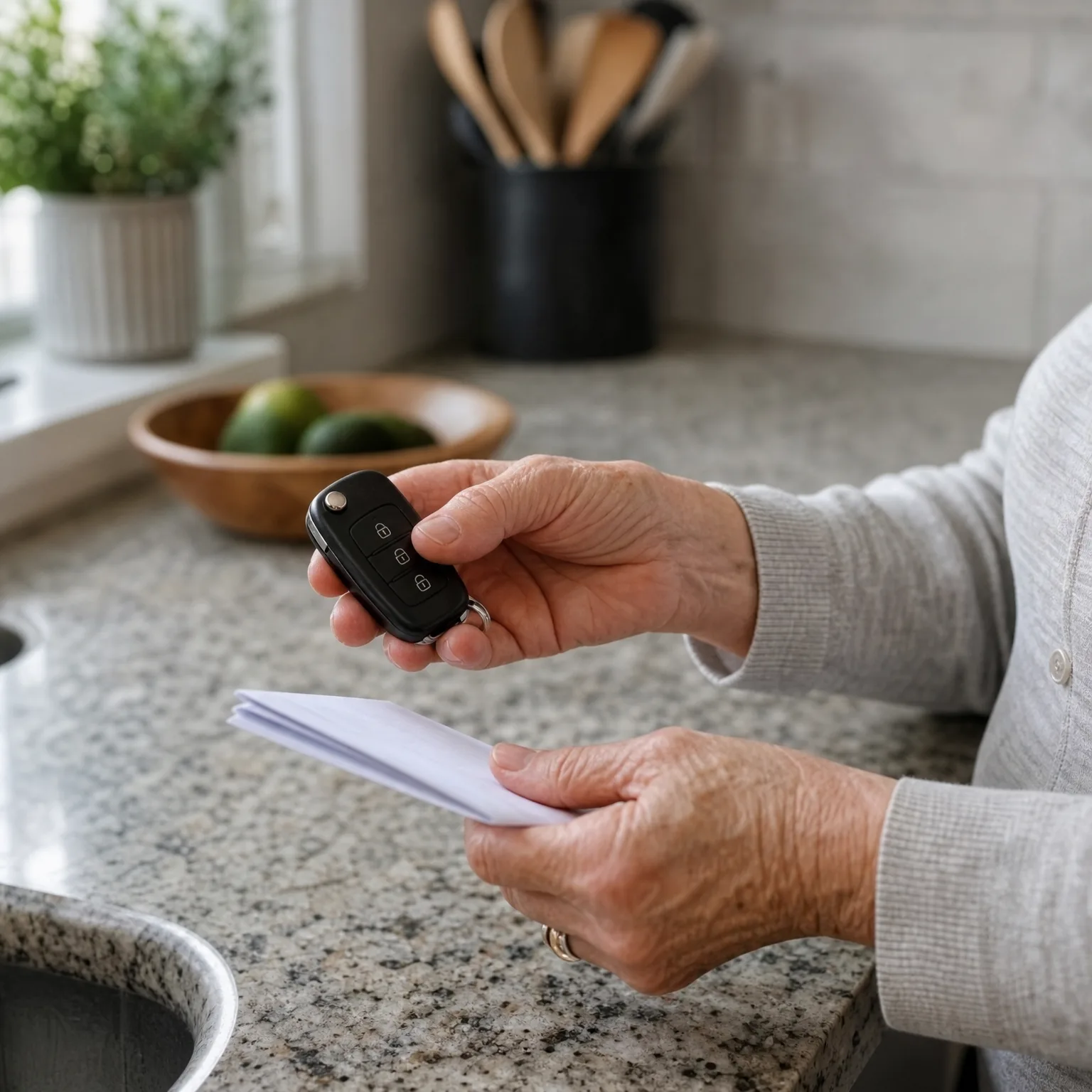
A renewal notice with a higher premium, a new letter about a required course, or a point added after a citation are not opinions. They're documents. If your parent's insurer has flagged something, that gives you a neutral starting point that isn't just your word against theirs.
Some insurers require an older driver to retake a vision test or complete a defensive driving course at renewal. If that letter arrives, it's worth going through it together rather than letting your parent handle it alone or set it aside.
A jump in premium at renewal can also be a signal. Insurers price on risk, and a sudden increase sometimes follows a claim or a citation your parent hasn't mentioned. Asking to see the renewal notice together, as part of helping with paperwork generally, can surface that without it feeling like an inspection.
None of this tells you how to reach a decision. It just gives you something concrete to point to instead of relying only on your own judgment of their driving.
What your parent stands to lose shapes how they hear you
For a lot of older adults, driving is the thing that makes the rest of their independence possible. Giving it up can mean asking someone else for every errand, every appointment, every visit to a friend. That's a loss, and it's worth naming it as one rather than treating the conversation as purely about safety statistics.
It helps to have an alternative ready before you raise the topic. If there's a shuttle, a rideshare account already set up, a neighbor who drives the same route, or family members who can take over certain trips, say so. A parent who hears "you should stop driving" and "here's how you'll still get to your appointments" in the same conversation has something to weigh against the loss.
If your parent has a doctor they trust, that doctor can sometimes raise driving fitness in a way that lands differently than it would coming from family. Some states also allow physicians or family members to request a reexamination through the DMV. Whether that's available, and what it requires, is set by the state, so check your parent's state DMV site or ask their doctor's office what the process looks like there.
If your parent is resistant, it usually isn't about denial alone. It's about what comes after. Keep the alternative concrete and keep bringing the conversation back to specific incidents rather than general decline.
Questions people ask about this
What are warning signs that an elderly parent should stop driving?
New dents or scrapes on the car, getting lost on familiar routes, slow reaction at intersections, and friends or neighbors mentioning a close call are common signs. No single one proves anything on its own, but a pattern of them over a few months is worth acting on rather than waiting out.
Can a doctor report an unsafe elderly driver to the DMV?
In some states, yes, a physician can submit a report that triggers a reexamination, and in some states family members can request one too. Whether this is available, and what the doctor or DMV requires, depends on the state, so the parent's state DMV website or their doctor's office is the place to confirm it.
How do I get my elderly parent to a driving evaluation?
Frame it as a checkup, similar to any other health screening, rather than a test they need to pass to keep their license. Occupational therapists who specialize in driving evaluations can give an objective assessment, and having a neutral third party deliver results sometimes lands better than family feedback alone.
Does an elderly parent's car insurance go up after a citation?
Often, yes, a citation tends to raise the premium at the next renewal, though by how much depends on the insurer and the state. If a renewal notice shows an increase and your parent hasn't mentioned a citation, that's worth asking about directly.
What should I do if my parent refuses to stop driving after an accident?
Start by reviewing the accident report and any citation together, since that gives you facts to discuss rather than just an opinion. If your parent's insurer requires a course or reexamination as a result, that external requirement can carry more weight than family concern alone. Some states also allow a family member to request a DMV reexamination, which is worth checking into if the conversation isn't moving.
See how your parent's current coverage compares before their next renewal.
Pull out your parent's most recent renewal notice and read it together this week. Check whether the premium changed and whether the insurer is requiring a vision test or driving course, since both are common after a certain age. If a citation or claim shows up that your parent hadn't mentioned, use that as the concrete starting point for a conversation rather than a general one about their driving. Line up a ride alternative, whether that's a family schedule, a rideshare account, or a local shuttle service, so you have something specific to offer if driving does come up. If your parent has a doctor they see regularly, consider asking that office how they typically handle driving fitness conversations. If your parent's state allows a family member or physician to request a DMV reexamination, look up what that process actually requires before you mention it.