Should I Worry About My Parent Driving at Night
Worry is worth acting on when it comes from specific signs, not just from the fact that it's dark out.
Free to compare
It depends on what you're actually seeing, not the hour
Some concern is reasonable. Eyes change with age, and night driving asks more of them: less contrast, glare from headlights, slower recovery after a bright light passes. That's true for most older drivers, not a flaw specific to your parent.
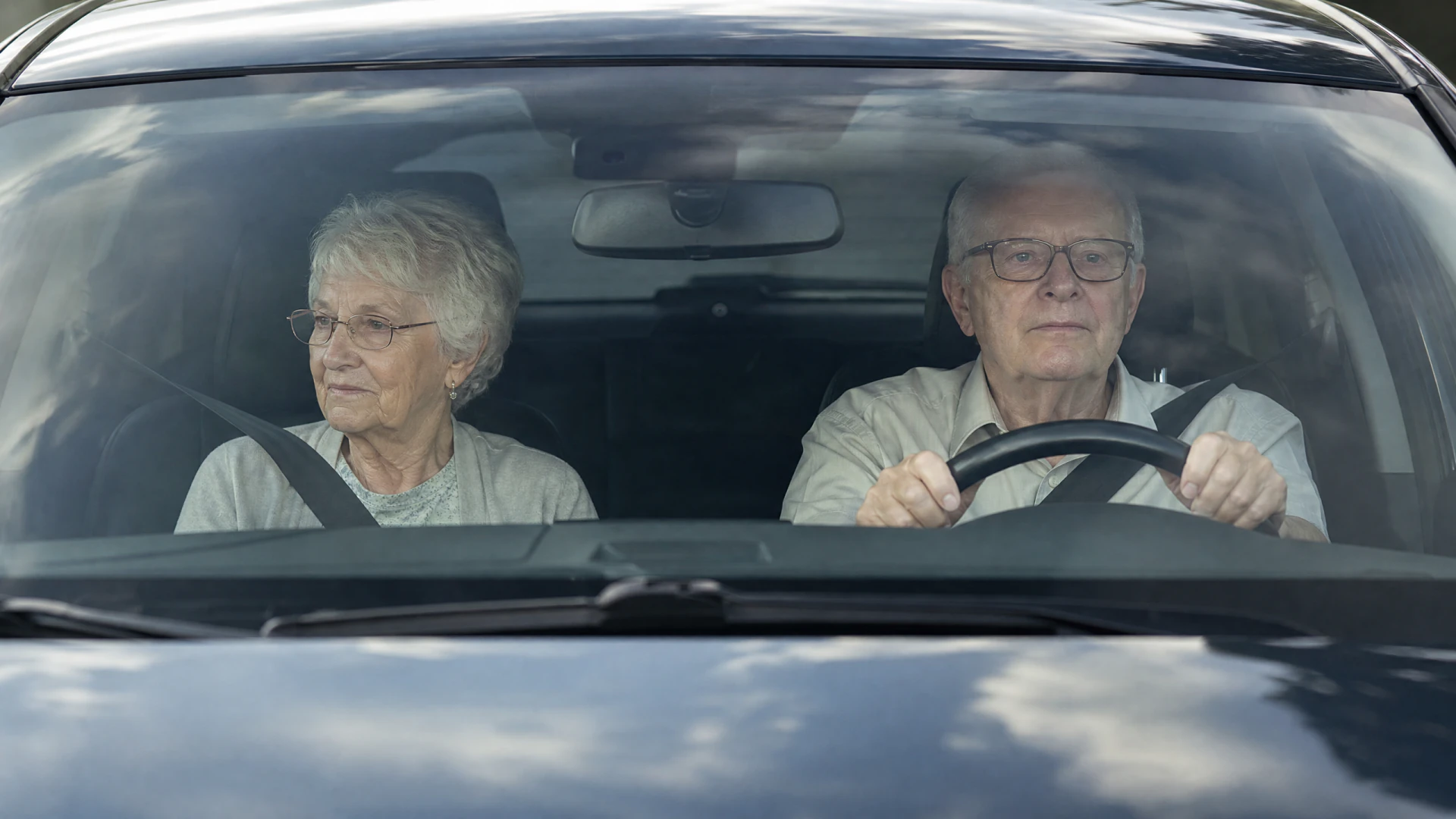
But normal age-related change and a real problem are different things. If your parent has started avoiding night drives on their own, or mentions glare bothering them more than it used to, that's the normal kind of change, and it's manageable. If they've had a close call, gotten lost on a familiar route, or you've noticed them drifting or braking late, that's a different category and worth addressing directly.
What their eyes are actually doing after dark
Night vision problems don't show up the same way for everyone, and they don't always show up in daytime driving at all. Someone can pass every errand run in daylight and still struggle badly once the sun goes down.
A few things are worth asking about directly. Does light from oncoming headlights linger and blind them longer than it used to. Do they have trouble telling a pedestrian or a dark-colored car apart from the road itself. Has a doctor mentioned cataracts, glaucoma, or macular degeneration, since all three affect night vision before they affect much else.
An eye exam answers this better than watching them drive does. If it's been a while since their last one, that's the first thing to arrange, and it's a concrete step rather than a conversation about taking away driving altogether.
If the exam turns up something treatable, like cataracts, the answer might not be stop driving at night. It might be get the surgery and then reassess.
What actually changes at night versus what just feels different
Night driving is harder for a reason that has nothing to do with skill. Depth perception, reaction time, and the ability to judge distance all lean more heavily on good lighting. Take the lighting away and gaps that used to feel manageable start to feel close.
This means a parent who's still a careful, competent daytime driver can genuinely struggle at night without their overall driving ability having declined. It's not a sign of broader decline by itself.
What matters more than the darkness itself is whether your parent recognizes the difference and adjusts for it. Someone who already avoids highway driving after dark, leaves earlier to get home before dusk, or asks for a ride to an evening event is managing the risk well. Someone who insists nothing has changed, despite missed exits or near misses, is the one worth worrying about.
Their insurer may ask about this too if there's ever a claim, so it's worth having an honest answer ready, for your own peace of mind more than anything else.
Questions people ask about this
What are warning signs that my parent should stop driving at night?
Repeated difficulty with glare, getting disoriented on routes they know well, unexplained dents or scrapes, or a near miss are the clearest signs. One of these alone isn't conclusive, but two or more together are worth acting on rather than watching for a while longer.
Will my parent's car insurance rate go up if they stop driving at night?
Restricting when someone drives doesn't by itself raise or lower a rate. What affects the premium is the insurer's overall assessment of risk, which includes things like accidents, violations, and sometimes a vision-related restriction on the license itself. Ask their insurer directly how a license restriction, if one gets added, would affect their policy.
Can a doctor restrict my parent's license to daytime driving only?
In some states, yes, a doctor or the licensing agency can place a daytime-only restriction on a license based on a vision exam or medical evaluation. Whether this is available, and how it's triggered, is set by the state, so check with the state's DMV or equivalent agency for how that process works.
How do I talk to my parent about giving up night driving without a fight?
Framing it around specific situations, like one stretch of road or one time of year, tends to go over better than an all-or-nothing request. Starting with an eye exam gives you both something factual to react to, rather than an argument about who's right.
Does car insurance cost less if an older driver only drives during the day?
Not automatically. Insurers price based on the driver's full risk profile, and a self-imposed habit of avoiding night driving isn't something most policies track or ask about. If a formal license restriction gets added, that's a different situation, and it's worth asking the insurer whether it affects the rate.
If this has you rethinking your parent's coverage, see how their policy compares to others before the next renewal.
Book an eye exam for your parent in the next few weeks, since that answers the underlying question better than any amount of watching them drive. Ask the eye doctor specifically about night vision and glare, not just overall acuity. While you're at it, pull up their current auto policy and see what it says about any existing restrictions. If the exam turns up a vision issue, ask their doctor whether it's treatable or whether a restricted license makes sense, and ask their insurer how any restriction would be handled on the policy. Keep the conversation with your parent tied to what the exam shows, not to age alone.